By the time the leaves drop, most of us can see exactly what summer left behind. A cluster of brown spots on one cheekbone. Freckles that merged into a patchy smudge. A pink flush across the nose that never quite settles. Concealer covers some of it, but the spots are still there in daylight, and every summer adds a few more.
IPL photofacial is one of the most direct ways to fade that kind of surface pigment and visible redness. But timing matters more with IPL than with most facials. Book it in July and you are fighting the sun the whole way. Book it once the days get short and the sun gets weak, and the treatment has room to work. Here is why late fall and winter are the best time for IPL, how a series actually plays out, and who should choose something else.
What IPL Photofacial Actually Does to Sun Spots and Redness
IPL stands for Intense Pulsed Light. Instead of a single laser wavelength, it delivers broad-spectrum light in short pulses. Two things in your skin absorb that light: melanin (the brown pigment in sun spots and freckles) and hemoglobin (the red in fine visible vessels and background flushing). The light turns into heat inside those targets, while the skin around them is largely left alone.
What you see afterward follows a predictable pattern:
- Hours 0 to 4: mild redness and warmth, similar to a light sunburn.
- Days 3 to 7: treated brown spots darken to a coffee-ground color. This is expected and means the pigment responded.
- Days 7 to 10: those darkened spots flake off or fade on their own.
- Weeks 2 to 3: overall tone looks brighter and more even as the skin clears the treated pigment.
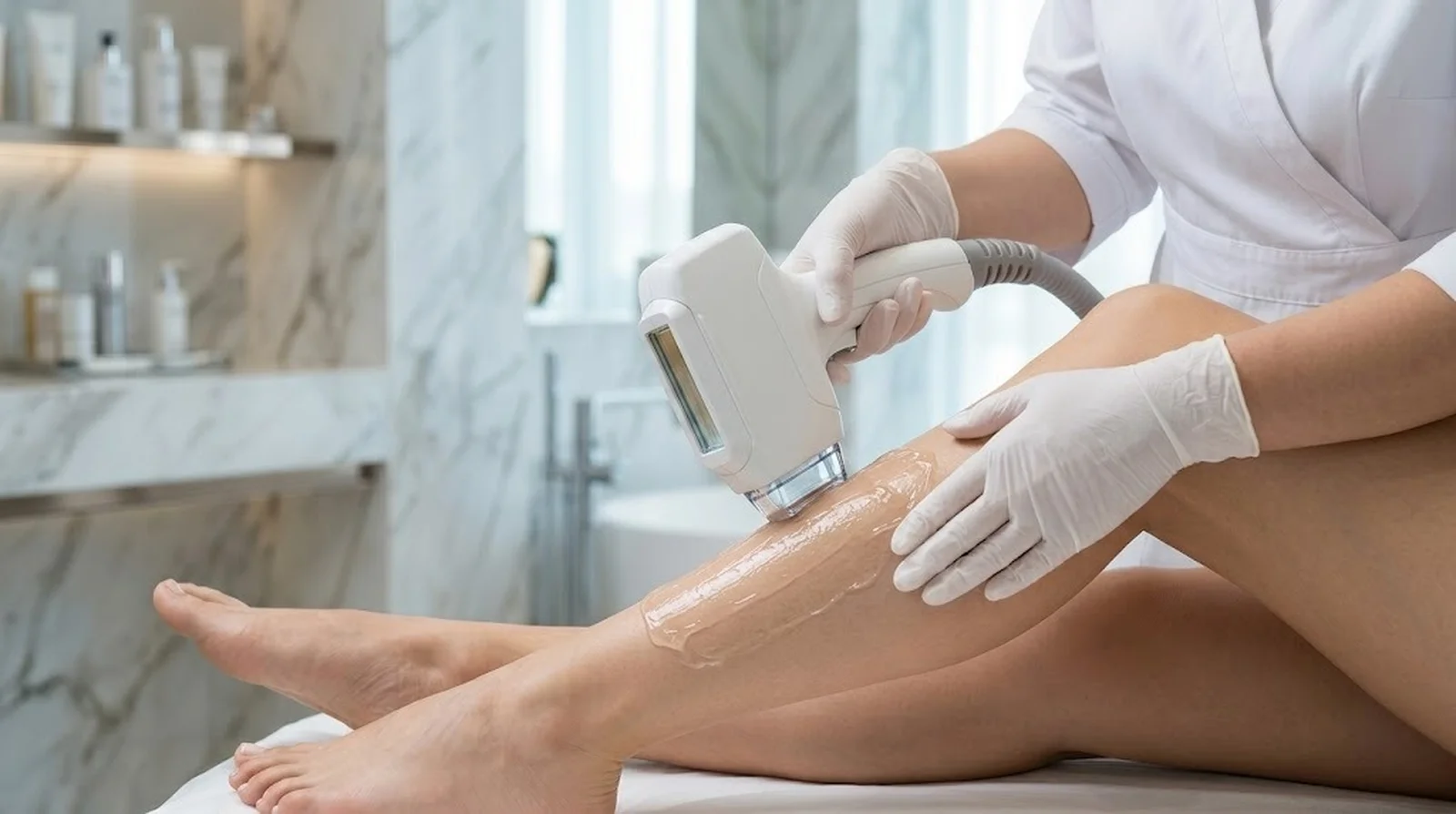
A full-face session takes about 20 minutes of active treatment. Most clients describe each pulse as a quick rubber-band snap, with the nose and hairline being the most sensitive spots. For a fuller rundown of the treatment itself, see our IPL photofacial in Chicago page.
Why Late Fall and Winter Are the Best Time for IPL
1. Less UV means less risk of new pigment forming
IPL works by heating pigment. Skin that has just been heated is more reactive to sun for a while afterward, and fresh UV exposure during a series can trigger new pigment, sometimes darker than what you started with. In summer, even a short walk or an afternoon on a patio adds up. Once the days shorten, UV levels drop sharply, and most of us spend far more time indoors under coats and scarves. That lower daily exposure is the main reason the cold months are the best time for IPL.
2. Your tan has faded, so the contrast is clearer
IPL needs contrast: the spot should be noticeably darker than the skin around it. When your skin is tanned, the surrounding skin is also full of active pigment, which competes for the light energy and raises the risk of irritation or blotchy lightening. By late fall, a summer tan has usually faded, sun spots stand out against your natural tone, and the light can go where it is supposed to go.
3. The darkening phase is easier to live with
That week of coffee-colored spots is real. It is easier to schedule around in a season of indoor plans than in a season of beach days, weddings, and sleeveless tops.
4. A full series fits before spring
If you start a series as the weather turns cold, you can finish three sessions before the sun comes back strong. That puts you into spring with clearer skin and a plan to protect it, instead of starting over every year.
Why IPL Works Best as a Series of 3 or More Sessions
One IPL session can lighten spots noticeably, but it rarely clears them. Pigment sits at different depths, and each session reaches what is closest to the surface at that moment. Over the following weeks, more pigment works its way up and becomes reachable in the next visit.
That is why we plan IPL as a series spaced about 4 weeks apart:
- Sun spots and age spots: often improve significantly after 3 sessions.
- Visible redness and fine vessels: usually need 4 to 5 sessions, and new vessels can appear over time, so occasional upkeep helps.
- Small areas like the backs of the hands: may need fewer sessions than a full face.
The honest trade-off: a 3-session series takes roughly 2 to 3 months from start to finish. If you want to be done before the sun is strong again, starting in late fall or early winter is what makes the math work. Rushing sessions closer together does not speed results; the skin needs that 4-week window to respond and settle.
If your concern is mostly brown spots and uneven tone, our pigmentation and dark spot treatment page explains how IPL compares with peels for different types of discoloration. If redness is the bigger issue, see rosacea and redness care for how we calm flushing and visible vessels between sessions.
IPL Aftercare: SPF Is Not Optional, Even in Winter
A gray winter sky still lets UV through, and snow reflects it back up at your face. The results you build over a series can be undone by a few unprotected weeks. Here is what we ask every IPL client to follow:
- Daily broad-spectrum SPF 30 or higher, every morning, through the whole series and after. This is the single biggest factor in keeping spots from coming back.
- Skip active ingredients for 3 to 5 days: no retinol, acids, scrubs, or strong vitamin C right after a session.
- Do not pick at darkened spots. Let them flake off on their own over 7 to 10 days.
- Keep skin cool for the first day: avoid saunas, hot yoga, and very hot showers.
- Moisturize generously. Winter air and indoor heating dry the skin, and a calm, hydrated barrier recovers faster.
For more on handling the cold-weather side of skin care, our post on repairing Chicago winter skin covers dryness, wind, and barrier support.
Who Should Not Get IPL (and What to Do Instead)
IPL is not the right fit for everyone, and a good provider will tell you so. We screen every client before the first session, and these are the situations where we pause or recommend a different path:
- Deeper and dark skin tones. IPL works best on fair to medium skin where spots clearly contrast with surrounding skin. On deeper skin, the light can be absorbed by normal skin pigment, raising the risk of burns or dark and light patches. We do not offer IPL for very dark skin tones.
- A recent tan or self-tanner. Active tanned skin, from sun or a tanning bed, should be allowed to fade first. Self-tanner should be fully worn off. We may ask you to wait several weeks before starting.
- Melasma-type patches. Larger gray-brown patches on the cheeks, forehead, or upper lip often react badly to heat and can darken. These need a slower, gentler plan.
- Pregnancy, recent use of photosensitizing products, or active irritation in the area. Tell us during your consultation so we can decide whether to wait.
If IPL is not a fit, there are other options. A carbon peel brightens dull tone and softens surface pigment with no downtime, and our post on the carbon laser peel explains how it works. Gentle chemical or herbal peels are another route for uneven tone on skin that should not be heated.
Planning Your IPL Photofacial in Jefferson Park
A realistic plan looks like this: a short consultation to check your skin type, spot depth, and any recent sun exposure; a first session once any tan has faded; then two or more follow-ups about 4 weeks apart. Most clients go back to work the same day, with SPF on and makeup optional.
We are at 6020 W Higgins Ave in Jefferson Park, a short drive from Edison Park, Norwood Park, Portage Park, and Harwood Heights. Pricing and package options change through the year, so see this month's specials before you book. To read more about the treatment or book a consultation, visit our IPL photofacial page.
Питання та відповіді
When is the best time of year for IPL in Chicago?
Late fall through winter. UV levels are lower, most summer tans have faded, and you spend more time indoors, which lowers the risk of new pigment forming between sessions. Starting as the weather turns cold also leaves time to finish a 3-session series before the sun is strong again.
How many IPL photofacial sessions will I need?
Most clients need 3 to 5 sessions spaced about 4 weeks apart. Sun spots often improve significantly after 3 sessions, while visible redness usually needs 4 to 5. We give you a realistic count after seeing your skin in person.
Do I need sunscreen after IPL if it is cloudy or winter?
Yes. UV passes through clouds and reflects off snow. Wear a broad-spectrum SPF 30 or higher every day during your series and afterward. Sun exposure is the main reason spots come back.
Can I get IPL if I have a tan or darker skin?
IPL works best on fair to medium skin with a clear contrast between the spot and the surrounding skin. If you have a recent tan, we ask you to let it fade first. We do not offer IPL for very dark skin tones, and we can suggest gentler options such as peels instead.
Is there downtime after an IPL photofacial?
Most clients return to normal activities the same day. Expect a few hours of mild redness, then treated spots darken for about 3 to 7 days before flaking off. Skip retinol, acids, and scrubs for 3 to 5 days.