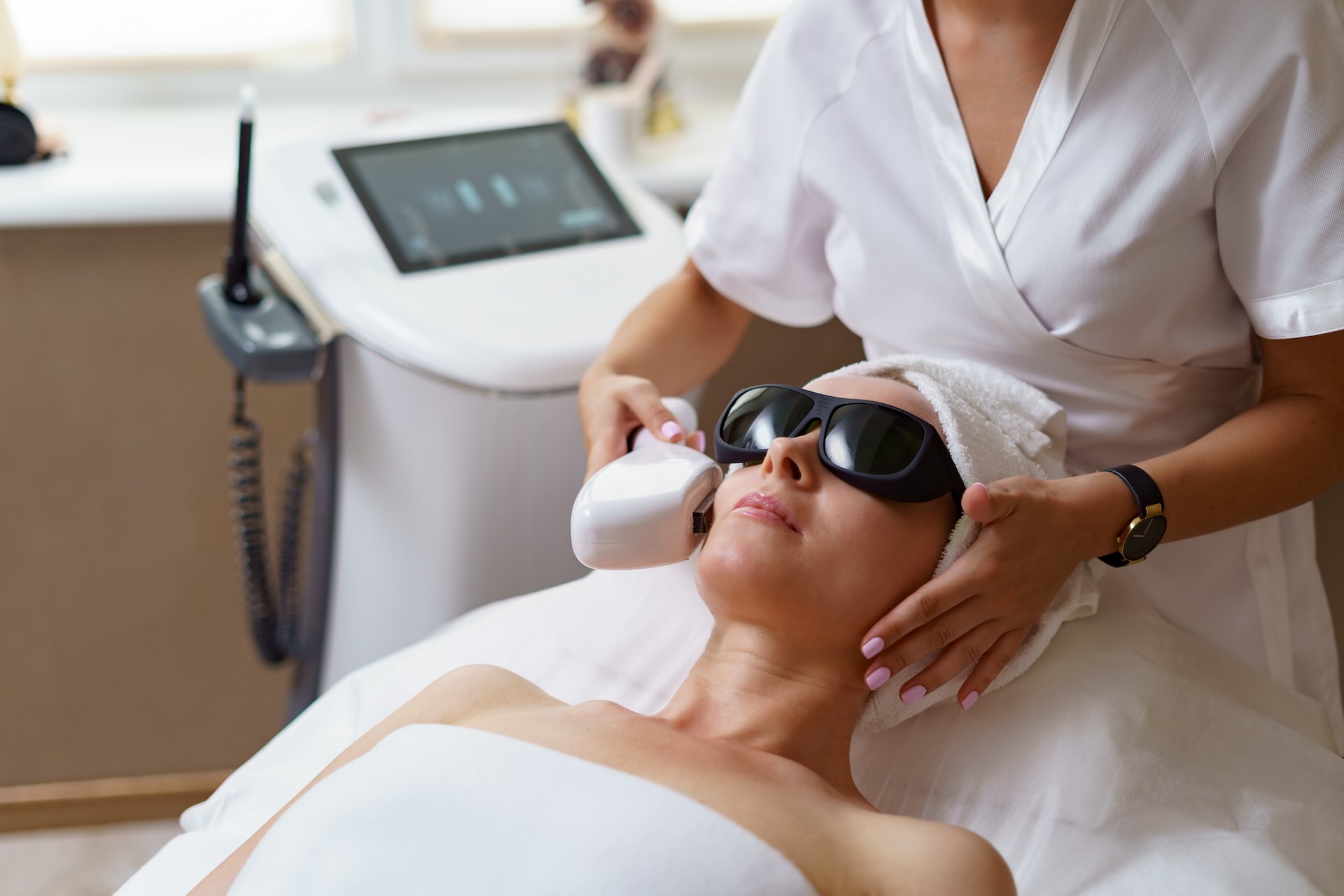
Deep skin resurfacing normally comes with a trade-off: meaningful results require several days of redness, peeling, and staying home. The carbon laser peel breaks that pattern. You come in looking tired, you leave looking like you slept well for two weeks — and you can go straight back to work. Understanding why requires a quick look at how the treatment actually works.
Why carbon is the key
Carbon particles are excellent at absorbing laser energy — far better than surrounding skin tissue. When applied as a liquid mask and left to penetrate into the pores, carbon acts as a selective target for the laser. The laser's energy concentrates on the carbon rather than heating the skin tissue around it. This is why the treatment can be powerful without burning or damaging the surrounding skin — the physics of selective absorption do the targeting work.
What happens during the two laser passes
First pass — the cleanse: As the laser vaporizes the carbon, it simultaneously destroys bacteria inside the pore (P. acnes, the bacteria responsible for inflammatory acne, is killed at the temperatures reached), removes the dead skin cells attached to the carbon particles, and clears the debris that makes pores look enlarged. This is the exfoliation pass.
Second pass — the collagen stimulation: With the carbon removed, the laser now heats the upper dermis — the layer of skin where collagen lives. The controlled thermal injury triggers fibroblasts to produce new collagen. This is the anti-aging pass. You won't feel this happening, but the collagen remodeling continues for 4–6 weeks after the session.
Total treatment time: 30–45 minutes. Sensation: mild warmth and a light snapping feeling, well-tolerated by almost all clients.
What it actually treats (and what it doesn't)
Carbon peels are genuinely effective for: enlarged pores, oily and acne-prone skin, active acne, post-acne marks, uneven texture, and dull tone. If you have moderate-to-severe acne scarring (deep pitting), a carbon peel will improve it but won't eliminate it — more aggressive resurfacing treatments are needed for that level of scarring.
For fine lines and early skin laxity, the collagen stimulation effect is real but gradual. A series of 4–6 sessions spaced 3–4 weeks apart shows more significant anti-aging benefit than a single session.
How it compares to a chemical peel
Chemical peels exfoliate using acid chemistry — dissolving the bonds between dead cells. They're effective and cost less per session, but stronger peels require downtime. Carbon laser peel uses photothermal energy, which allows it to target deeper structures (bacteria, collagen) that acids can't reach, without the recovery period. For clients who can't afford to look visibly recovering for a week, the laser peel is the better tool. For clients on a budget working on texture and pigmentation, a monthly superficial chemical peel is a reasonable alternative.
April pricing
This month, a carbon peel is $150. For context, the same treatment at a dermatology clinic in Chicago typically runs $250–$400. If you've been curious about laser skin treatments and want to see how your skin responds, this is a low-risk entry point. See our full laser treatments page for all available options including IPL, HIFU, and carbon peeling.
Julia is a co-founder of Callista Beauty & Spa in Jefferson Park, Chicago, a beauty professional originally from Ukraine with 15 years in cosmetology. Her background shapes how the team approaches skin and body treatments across the salon.
Frequently Asked Questions
Is there any downtime at all?
None. Mild redness for 1–2 hours is the most common aftereffect. You can wear makeup immediately if needed, though we recommend letting the skin breathe for the rest of the day if possible.
Is the carbon laser peel safe for all skin tones?
Yes. Because the laser targets the carbon rather than melanin, it doesn't carry the hyperpigmentation risk that some other laser treatments do on deeper skin tones. It's one of the more inclusive laser treatments available.
How many sessions do I need?
One session produces a visible result — brighter, smoother skin. For lasting improvement in acne, pores, and fine lines, 4–6 sessions spaced 3–4 weeks apart is the standard course. After that, monthly maintenance keeps results consistent.
Can I combine this with other treatments?
Yes. We often pair it with LED light therapy (red light extends the collagen stimulation effect) or a hydrating mask applied immediately after. We wouldn't combine it with a chemical peel on the same day — the skin needs to be treated one way at a time.
Ready to experience it yourself?
Book an appointment at our Jefferson Park location in Chicago.
Book Now