If you're dealing with acne past your twenties, you've probably tried the same products that worked when you were sixteen. And they probably made things worse — drier skin, more redness, breakouts that moved from your forehead to your chin. That's not bad luck. That's the wrong treatment for a different problem.
Teen acne and adult acne share a name, but they behave differently, show up in different places, and respond to different approaches. Understanding which type you're dealing with is the difference between clear skin and a frustrating cycle of products that don't work.
Teen Acne: Oil, Bacteria, and the T-Zone
Teenage breakouts are driven by one thing: hormonal changes during puberty flood the skin with excess sebum (oil). This oil mixes with dead skin cells, clogs pores, and creates an environment where acne-causing bacteria thrive. The result is the classic T-zone pattern — forehead, nose, and chin covered in blackheads, whiteheads, and inflamed pimples.
Teen acne tends to be:
- Widespread — covering large areas of the face, sometimes the back and chest
- Oily — skin feels greasy by midday, makeup slides off
- Surface-level — mostly blackheads, whiteheads, and small inflamed spots
- Responsive to oil control — products that reduce sebum production tend to work well
The good news: teen acne usually responds well to consistent, relatively simple treatment. The bad news: "consistent" is the hard part when you're fifteen.
What Actually Works for Teen Acne
Salicylic acid (BHA) is the workhorse ingredient. It's oil-soluble, which means it can penetrate into clogged pores and dissolve the sebum plug from inside. A 2% salicylic acid cleanser used twice daily is often enough for mild to moderate teen acne. It's gentle enough for daily use and doesn't dry skin out the way benzoyl peroxide can.
Benzoyl peroxide kills acne bacteria on contact. Start with 2.5% — studies show it's as effective as 10% with significantly less irritation. Apply it as a thin layer after cleansing, and give it 4–6 weeks before judging results.
Professional facials for teens are underrated. A monthly deep cleansing facial with proper extraction removes existing blockages, while enzyme or gentle chemical peels prevent new ones. At our salon, we see teens who've spent hundreds on drugstore products get better results from three professional facials. The extractions alone make a visible difference that no topical product can match.
What to avoid: Over-washing (twice daily is enough), harsh scrubs with beads or grit (they spread bacteria and cause micro-tears), and the temptation to pop pimples (it pushes bacteria deeper and causes scarring).
Adult Acne: Hormones, Inflammation, and the Jawline
Adult acne — particularly in women over 25 — is a fundamentally different condition. It's driven by hormonal fluctuations (menstrual cycle, stress, birth control changes), chronic low-grade inflammation, and a compromised skin barrier. It shows up differently too: deep, painful cysts along the jawline, chin, and lower cheeks. Often there's no excess oil at all — the skin can even feel dry.
Adult acne tends to be:
- Localized — concentrated on the lower face, jawline, and neck
- Deep — cystic and nodular, sitting under the skin rather than on the surface
- Cyclical — flaring with menstrual cycles, stress, or dietary triggers
- Stubborn — doesn't respond to typical acne products, may get worse with harsh treatments
- Accompanied by dryness or sensitivity — the skin barrier is often already compromised
This is where the "just use what worked as a teenager" approach backfires. Aggressive oil-stripping products destroy an already-weakened barrier, causing more inflammation and — paradoxically — more breakouts.
What Actually Works for Adult Acne
Barrier repair first. Before treating acne, the skin barrier needs to be intact. That means a gentle, non-foaming cleanser, a ceramide-based moisturizer, and SPF every day. This feels counterintuitive when you're breaking out — "I should moisturize MORE?" — but a healthy barrier reduces the inflammation driving the breakouts.
Retinoids are the gold standard for adult acne. They increase cell turnover, prevent clogged pores, reduce inflammation, and improve texture and fine lines simultaneously. Start low (0.25% retinol) and build up gradually. Expect purging in the first 4–6 weeks — it gets worse before it gets better. This is normal.
Niacinamide (Vitamin B3) at 5–10% reduces sebum production, calms inflammation, strengthens the skin barrier, and fades post-acne marks. It plays well with almost every other ingredient and rarely causes irritation. If you add one thing to your routine, make it this.
Professional treatments for adult acne make the biggest difference because they address the root causes that topical products can't fully reach:
- Chemical peels — mandelic acid and lactic acid peels are gentle enough for sensitized adult skin while effectively clearing pores and reducing inflammation
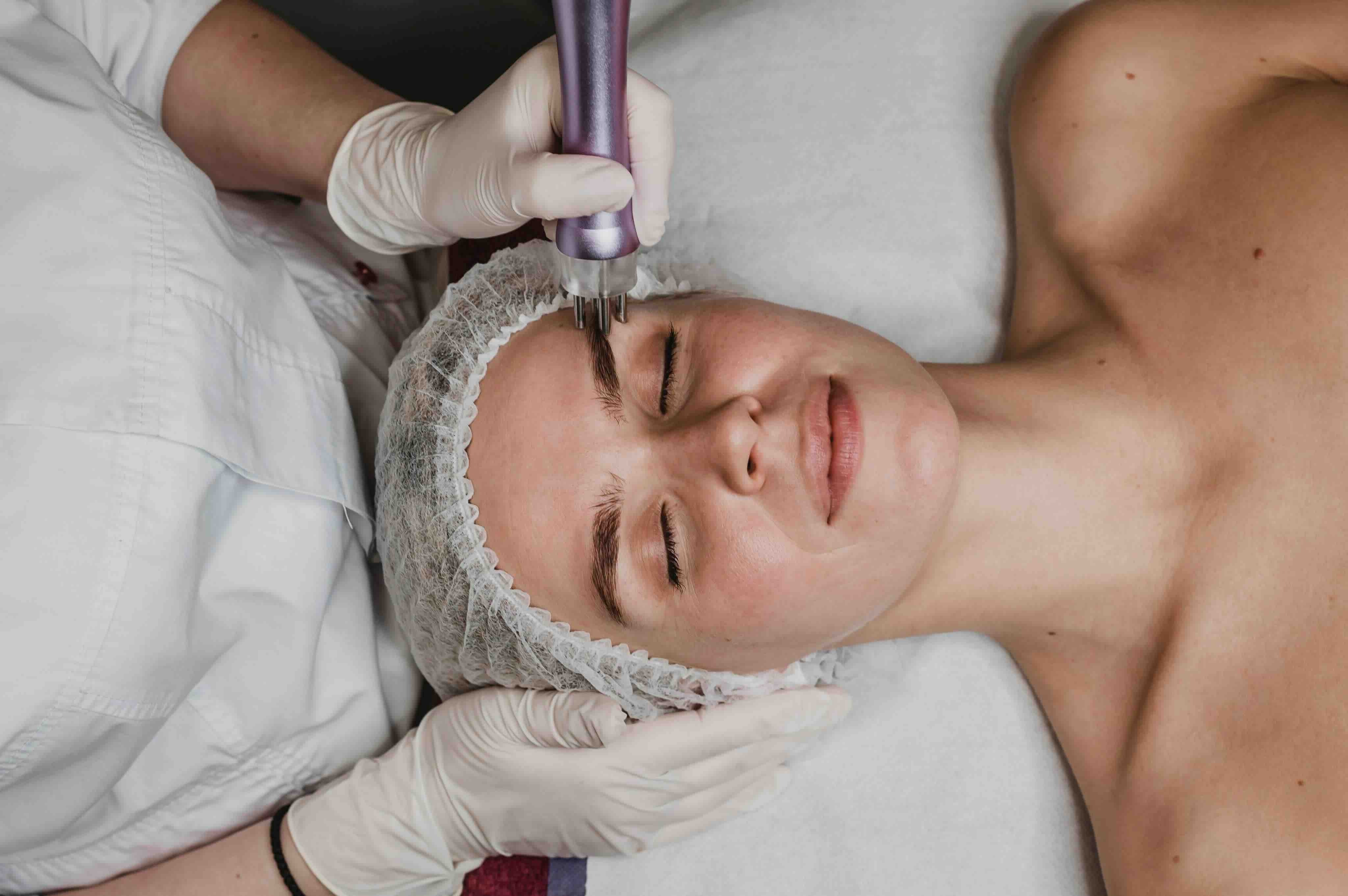
- Microneedling — stimulates collagen production, improves product absorption, and helps treat acne scars simultaneously
- LED light therapy — blue light kills acne bacteria, red light reduces inflammation. No downtime, no irritation, works well as a monthly maintenance treatment
- HydraFacial — deep extraction with simultaneous hydration. Clears pores without stripping the skin barrier
At our salon, we typically recommend starting with a course of gentle chemical peels (every 3–4 weeks) combined with a home care routine focused on barrier repair. Most adult acne clients see significant improvement within 3 months.
The Mistakes Both Groups Make
Changing products too often. Every new product needs 6–8 weeks to show results. Switching every two weeks means nothing ever has time to work. Pick a routine and commit to it.
Skipping SPF. Most acne treatments increase sun sensitivity. Unprotected sun exposure causes post-inflammatory hyperpigmentation — the dark marks left behind after a pimple heals. These marks can last months. A lightweight, non-comedogenic SPF 30+ prevents them entirely.
Ignoring diet. Dairy and high-glycemic foods (sugar, white bread, processed snacks) have a proven link to acne in studies. You don't need to eliminate everything — but if you're doing everything else right and still breaking out, a food diary can reveal patterns.
Not getting professional extractions. Existing clogged pores won't clear themselves with products alone. Professional extraction removes the blockage immediately, while products prevent new ones from forming. The combination is faster and more effective than either approach alone.
When to See a Professional
Try a consistent home routine for 8 weeks. If you're not seeing improvement — or if you have deep cystic acne, scarring, or acne that significantly affects your confidence — book a consultation. A professional skin assessment can identify your specific acne type, triggers, and the fastest path to clear skin.
Whether you're sixteen or forty-six, the approach is the same: understand what's actually causing your breakouts, treat that specific cause, and be patient enough to let the treatment work.
Julia is a co-founder of Callista Beauty & Spa in Jefferson Park, Chicago, a beauty professional originally from Ukraine with 15 years in cosmetology. Her background shapes how the team approaches skin and body treatments across the salon.
Preguntas frecuentes
At what age does teen acne usually clear up?
Most teen acne improves significantly by the early twenties as hormone levels stabilize. However, about 50% of women and 25% of men continue to experience some form of acne into their thirties. If acne persists past 20–22, it's likely transitioning into adult acne and needs a different treatment approach.
Can facials help with active acne or will they make it worse?
Professional facials help acne when done correctly. The key is the type of facial: gentle extraction-based facials, chemical peels with salicylic or mandelic acid, and LED therapy all improve acne. Avoid facials with heavy oils, steam (which can worsen inflammation), or aggressive scrubbing. Always tell your esthetician about your acne so they can customize the treatment.
How often should I get professional acne treatments?
For active acne, every 3–4 weeks is ideal. This timing aligns with the skin's natural cell turnover cycle. Most clients see noticeable improvement after 3 sessions and significant clearing after 6. Once acne is controlled, monthly maintenance facials help prevent recurrence.
Is it safe for teenagers to get chemical peels?
Yes, when appropriate peels are used. Gentle enzyme peels and low-concentration salicylic acid peels (15–20%) are safe for teens and very effective for acne. Deep peels like TCA are not appropriate for teenage skin. At our salon, we assess each teen's skin individually and select the mildest effective treatment.
Why does my acne get worse before my period?
Progesterone rises in the week before menstruation, which increases sebum production and makes skin more prone to clogging. Simultaneously, estrogen drops, reducing the skin's anti-inflammatory protection. This hormonal shift is why many women experience cyclical breakouts along the jawline and chin. Consistent use of retinoids and niacinamide helps reduce the severity of these monthly flares.
Can I wear makeup if I have acne?
Yes — just choose non-comedogenic, oil-free products. Mineral makeup is particularly good for acne-prone skin because it sits on top of the skin rather than sinking into pores. The most important thing is removing makeup thoroughly every night with a gentle double-cleanse: oil-based cleanser first to dissolve makeup, then a water-based cleanser to clean the skin.