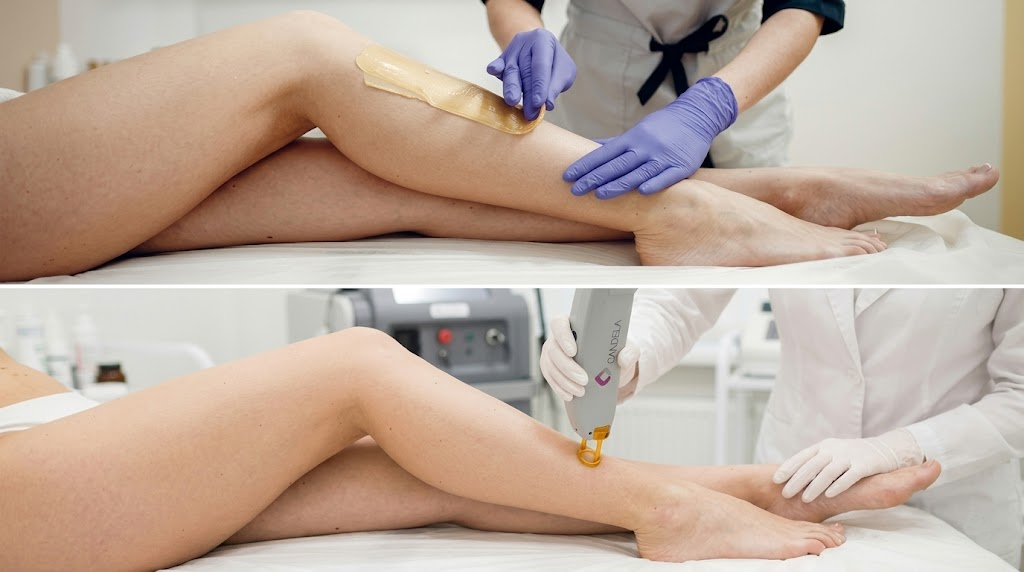
Waxing pulls hair out. Laser destroys the follicle that grows it. That difference in mechanism is the reason one of these is temporary and the other isn't, and it's also the reason people get confused when laser "stops working" or waxing "gets easier over time." Neither of those things is really true, once you understand what each method is actually doing under the skin.
Here's the real comparison, including the parts that don't make it into most marketing pages.
What Each Method Actually Does
Laser Hair Removal
The laser targets pigment in the hair. That pigment absorbs the light, converts it to heat, and the heat travels down the hair shaft into the follicle, damaging the structure that produces new hair. This isn't new or experimental science. It's built on research from the early 1980s, and the core principle hasn't changed since.
The catch: this only works on hair that's actively growing at the moment of treatment. Hair cycles through three phases, and only one of them, the active growth phase, has a hair shaft connected all the way down to the follicle. In the other two phases, the shaft is either disconnected or dormant, so there's nothing for the laser to conduct heat through.
At any given time, only part of your hair is in that active growth phase. On the face, it's most of it, roughly 60-70%. On the bikini line and underarms, it's closer to 30%. On legs and arms, closer to 20%. That's the actual reason you need multiple sessions spaced weeks apart. Each session only catches the hair that happens to be active right then. The next session catches a new batch that's cycled into growth since the last visit.
Waxing
Waxing pulls the entire hair, shaft and root, out of the follicle in one motion. It does not damage the follicle itself. The structure that grows the hair stays completely intact under the skin, which is why a new hair shows up within 3 to 6 weeks. You're not slowing anything down at the follicle level. You're just temporarily removing what's already there.
Why Order Matters If You're Switching
If you wax right before a laser appointment, you've pulled out the exact thing the laser needs to work. No hair shaft means no path for the heat to reach the follicle. Anyone switching from waxing to laser needs to shave only, no waxing, for 4 to 6 weeks before the first laser session so there's something for the laser to target.
Side-by-Side Comparison
| Laser Hair Removal | Waxing | |
|---|---|---|
| What it does | Damages the follicle so it stops producing hair | Pulls existing hair out; follicle stays intact |
| Regrowth | Reduced long-term, not eliminated | Full regrowth in 3-6 weeks |
| Sessions needed | 6-12+, spaced weeks apart | Every 3-6 weeks, ongoing |
| Works on all hair colors | No, needs pigment in the hair | Yes |
| Effect on ingrown hairs | Reduces them over a course of treatment | Can cause or worsen them |
| Pain over time | Decreases as hair thins | Stays about the same each time |
| Skin prep needed | Shave only, no waxing, 4-6 weeks before starting | None |
"Permanent" Doesn't Mean What the Ads Imply
The FDA's actual definition of permanent hair reduction is a long-term, stable drop in the number of hairs that grow back after a full treatment course. That's it. It's not a promise of zero hair forever, and no legitimate provider should tell you otherwise.
A realistic range after a full course is 70-90% reduction in hair density. The hair that's left is usually finer, lighter, and slower-growing than what you started with, not just fewer of the exact same hairs.
On session counts: 6-8 sessions gets advertised because it's an easy number to put in an ad. For a lot of clients, getting to that fuller 80-90% range realistically takes 8-12 sessions. That's not a sign anything went wrong. It's just how the biology works when you're catching hair across multiple growth cycles.
Why Hair Sometimes Comes Back After Laser
This is the part that generates the most confused and frustrated clients, so it's worth being direct about it.
Hormones cause new hair, not old hair coming back. PCOS, pregnancy, menopause, and stopping certain medications (spironolactone, birth control) can all trigger hair growth in areas that were already cleared. This isn't the laser failing on hair it already treated. It's a hormonal shift creating new hair growth that wasn't there to treat in the first place. If you have a hormonal condition that affects hair growth, expect to need touch-ups beyond what someone without that condition would need.
Laser doesn't work on hair without pigment. Blonde, red, white, and gray hair don't respond well because there's nothing for the laser to grab onto. If most of your hair falls into one of those categories, laser is not going to give you the results it gives someone with dark hair, and no amount of extra sessions fixes that.
A small number of people get more hair, not less, on treated areas. This is a real, documented reaction called paradoxical hypertrichosis. It happens when fine, light hair gets stimulated by laser energy that isn't strong enough to destroy it, and the hair responds by growing in thicker and darker instead. A systematic review covering close to 10,000 patients put the rate at around 3%, and it's concentrated almost entirely on the face and neck: outside those areas it drops to a fraction of a percent. It's uncommon, but real enough to know about before you start, especially if you're treating fine facial hair.
Pain and What Actually Bothers People
Waxing pain is mechanical and sharp, and it doesn't change much appointment to appointment. Laser feels more like a quick hot pinch, often described as a rubber band snap, and it actually gets less intense over a course of treatment as the hair thins out. Cooling built into the device helps during the session either way.
Ingrown hairs are where the two methods really diverge. Laser reduces them over a course of treatment because it's addressing the follicle causing the problem. Waxing can cause or worsen ingrown hairs, particularly with coarse or curly hair, because the hair can break off below the skin surface during the pull instead of coming out clean.
One more thing worth knowing if you wax: it's not compatible with everything. Waxing while on Accutane, or for a while after stopping it, carries a real risk of skin tearing because the skin is more fragile than usual. Topical retinoids (Retin-A, tretinoin, adapalene) should be paused about a week before a wax appointment for the same reason.
What Callista Offers
We run laser hair removal on the Candela GentleMax Pro, a dual-wavelength system, alongside waxing for clients who prefer it or use it between laser sessions. Full detail on session counts and what to expect is in our laser hair removal guide and pricing breakdown. If you're switching from waxing to laser, we'll walk you through the shave-only window before your first appointment so the first session actually works.
Julia is a co-founder of Callista Beauty & Spa in Jefferson Park, Chicago, a beauty professional originally from Ukraine with 15 years in cosmetology. Her background shapes how the team approaches skin and body treatments across the salon.
Frequently Asked Questions
Is laser hair removal actually permanent?
Not in the sense of zero hair forever. The realistic outcome after a full course is 70-90% reduction in hair density, with the remaining hair finer and slower-growing. Some maintenance sessions over time are normal, not a sign of failure.
Why did my hair grow back after laser?
Most of the time it's not the same hair returning. Hormonal changes from PCOS, pregnancy, menopause, or stopping certain medications can trigger new hair growth in areas that were already cleared. It's new growth, not the laser losing effectiveness on hair it already treated.
Can I wax and get laser hair removal at the same time?
Not on the same area. Laser needs an intact hair shaft to work, and waxing removes it. If you're switching to laser, plan on shaving only for 4-6 weeks before your first session.
Does laser hair removal hurt more than waxing?
Most people find laser less intense overall, and it gets milder each session as hair thins out. Waxing pain stays about the same every time since it's the same mechanical pull each visit.
Will laser work if I have blonde or gray hair?
Not well. The laser needs pigment in the hair to work, so blonde, red, white, and gray hair respond poorly regardless of how many sessions you do.
Can laser hair removal make hair worse instead of better?
In a small number of cases, yes, this is called paradoxical hypertrichosis. It happens when fine hair is stimulated rather than destroyed by laser energy, most often on the face and neck. It's uncommon but real, which is why proper energy settings for your hair and skin type matter. ---
Ready to experience it yourself?
Book an appointment at our Jefferson Park location in Chicago.
Book Now