
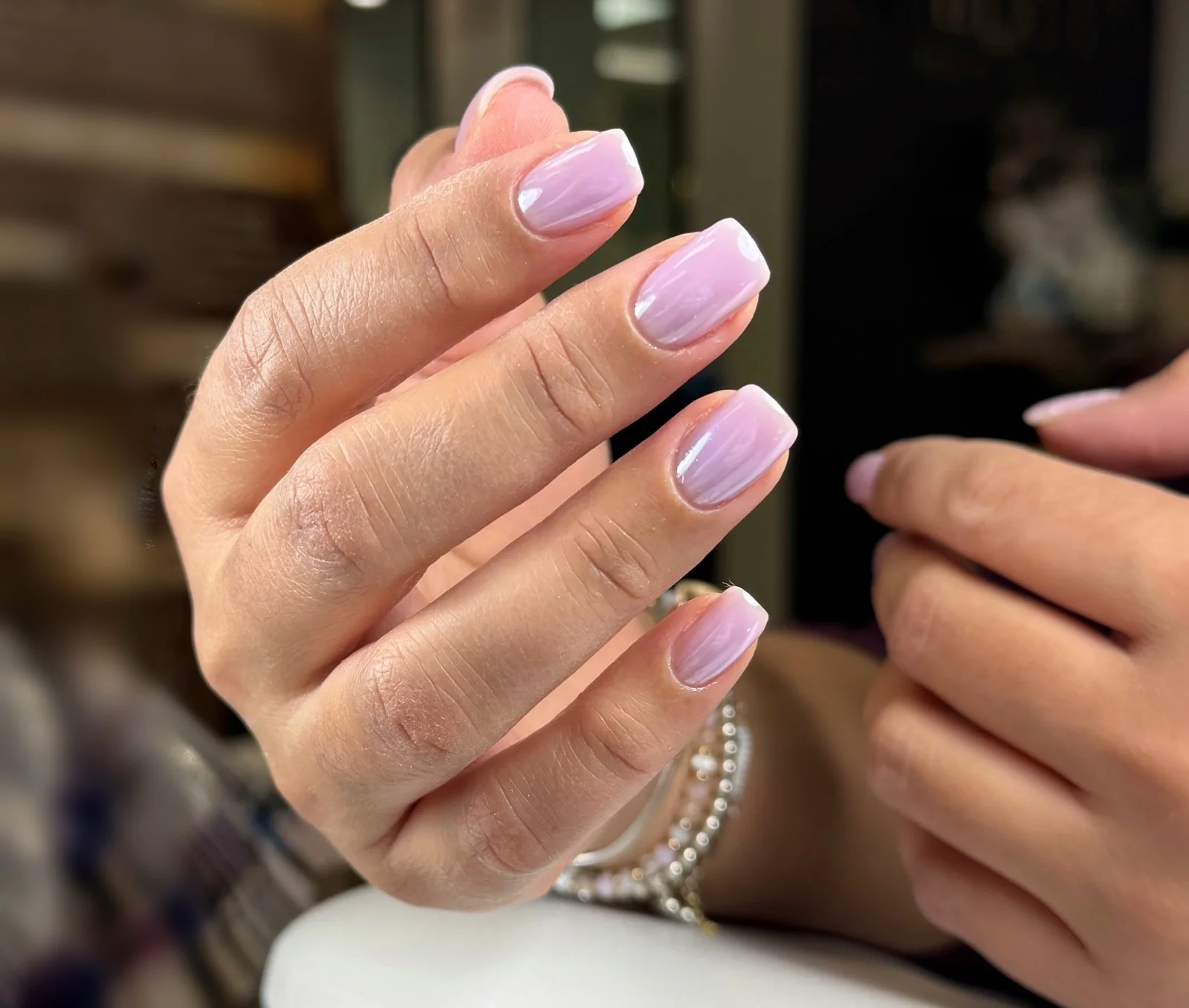
You get a gel manicure, and by day 10 the tips are chipping. You switch to acrylics, and three months later your natural nails feel thin and bendy. Somewhere in between, a nail tech mentions "hard gel," and you're not sure if that's a third option or just a different name for the same thing. It's a different product, and the choice between the three decides how long your manicure lasts, how it comes off, and what your nails look like underneath.
Here's a plain comparison of hard gel, soak-off gel polish, and acrylic, plus who each one actually suits.
What Hard Gel Actually Is (and Why It's Not Gel Polish)
All three products sit on top of your natural nail, but they're built differently:
- Soak-off gel polish is a thin, flexible color coat cured under a UV/LED lamp. Its molecules are loosely linked, which is why acetone can break it down. It adds shine and color, but almost no structure.
- Hard gel is a thicker, tightly cross-linked gel that's applied in layers and shaped into a slight curve (the "apex") for strength. Acetone barely affects it, so it has to be filed rather than soaked. It's sturdier than soft builder gel and adds real structure to the nail.
- Acrylic is a powder mixed with a liquid monomer that air-hardens into a rigid shell. It's the strongest of the three for long extensions, but also the least flexible.
A useful way to think about it: gel polish is paint, hard gel is a thin protective layer that bends a little with your nail, and acrylic is a hard cast.
Hard Gel vs Gel Polish vs Acrylic: Side-by-Side
| Soak-off gel polish | Hard gel | Acrylic | |
|---|---|---|---|
| Typical wear | 2–3 weeks | 3–4 weeks | 2–3 weeks between fills |
| Adds strength | Very little | Yes, flexible support | Yes, rigid support |
| Removal | Acetone soak, about 10–15 minutes | Filed down with an e-file; often rebalanced instead of fully removed | Long acetone soak (20–30+ minutes) or heavy filing |
| Feel on the nail | Thin, natural | Thin to medium, natural | Thicker, stiffer |
| Best for | Strong nails, short-term color | Weak, peeling or growing-out nails | Dramatic length (with trade-offs) |
How Long Each One Lasts
Gel polish: 2–3 weeks, if your nails are already strong
Because gel polish has no structure of its own, it moves with your nail. If your nails bend or peel, the polish lifts at the free edge, and chips usually show up somewhere between day 10 and day 14.
Hard gel: 3–4 weeks without lifting or chipping
Hard gel holds its shape even when the nail underneath flexes, so most clients get a full 3–4 weeks. After that the limit isn't the product — it's growth. As the nail grows out, the apex moves forward and the balance of the nail shifts, which is why we recommend a refill every 3–4 weeks for any coating.
Acrylic: long-lasting, but fills come every 2–3 weeks
Acrylic rarely chips, but the gap at the cuticle grows in quickly and the rigid shell can lift or crack the natural nail if you snag it. Most acrylic wearers are back in the chair every 2–3 weeks.
Removal: Filed, Soaked, or Both
This is where the three products differ most, and where most nail damage happens.
- Gel polish comes off with acetone in about 10–15 minutes. Done gently, that's easy on the nail. Done badly — scraping off half-dissolved polish — it strips layers of the nail plate.
- Hard gel is filed, not soaked. A trained tech uses an e-file to take down the color and most of the old gel, then leaves a thin base layer and rebuilds on top. Your natural nail isn't exposed to repeated acetone soaks or scraping, which is a big reason hard gel tends to be kinder to weak nails over time.
- Acrylic needs either a long acetone soak or significant filing. Both are harder on the nail and the surrounding skin than either gel option.
The honest trade-off with hard gel: filing has to be done by someone who knows what they're doing. An aggressive tech with an e-file can thin your nails just as badly as a scraper. If you want to know what good technique looks like, our post on how to tell if your manicure is damaging your nails covers the red flags.
What Each Option Does to Your Natural Nails
Gel polish is fine for strong, healthy nails, but it won't fix weak ones. Many people with thin nails go through a cycle: gel chips, they pick at it, the nail peels, and the next set lifts faster.
Hard gel works as a protective shell. Because it doesn't bend the way gel polish does, the natural nail underneath is less likely to break, which lets it grow past the fingertip. Many of our clients who come in with short, brittle nails grow out noticeably stronger natural length after 3–4 consistent appointments.
Acrylic gives length immediately, but the rigid shell, the monomer odor, and the harsher removal are why we don't offer it. Instead, we use polygel extensions for clients who want length, then move to a hard gel overlay once the natural nail is strong enough.
Who Should Pick Which
- Choose gel polish if your nails are already strong, you want color for an event or a short trip, and you're fine with 2–3 weeks of wear.
- Choose hard gel if your nails peel, split, or bend; if you're trying to grow out your own nails; or if you want a manicure that genuinely lasts 3–4 weeks. A hard gel overlay with a stronger apex is the better pick for longer natural nails that need extra support.
- Choose extensions (polygel rather than acrylic) if you want length you can't grow yet, and you're willing to start shorter and build up.
- Skip coatings for a while if your nails are badly damaged and you'd rather let them recover. A regular e-file manicure or a Japanese manicure keeps them neat in the meantime.
Why a Hand Spa Matters in a Chicago Winter
From late fall through March, Chicago air is cold outside and bone-dry inside thanks to forced-air heat. Hands take the brunt of it: cracked knuckles, ragged cuticles, and hangnails that catch on everything. Dry cuticles also pull away from the nail, and that's often where a manicure starts to look grown-out before it actually is.
A hand spa add-on is built for exactly this. It typically includes:
- An exfoliating scrub to lift dry, flaky skin
- A hydrating mask that sits on the skin long enough to actually absorb
- Warm towels to help the moisture go deeper
- Cuticle oil and a rich hand cream to finish
It won't change how long your hard gel lasts, but softer cuticles mean cleaner edges for longer, and hydrated skin is less likely to crack on a January morning. Between visits, cuticle oil once a day and gloves outdoors do more than any single treatment.
Getting a Hard Gel Manicure in Jefferson Park
At our Jefferson Park studio on W Higgins Ave, every hard gel manicure starts with a precise e-file (Russian-style) dry manicure, then structured hard gel and the color of your choice. If you're coming in with acrylics, dip powder, or another salon's product, add removal when you book so we can set aside enough time to take it off safely and check your natural nails first.
Browse all options on our Nail Bar services page, and see this month's specials for current pricing and add-on offers.
Frequently Asked Questions
Is hard gel the same as builder gel?
Not quite. Builder gel (sometimes called soft gel or BIAB) is a thicker soak-off gel. Hard gel is more tightly cross-linked, so it's stronger and doesn't dissolve in acetone. It has to be filed down instead of soaked off, which also means it can be rebalanced and refilled rather than fully removed every visit.
How long does a hard gel manicure last?
Most clients get 3 to 4 weeks without lifting or chipping. After that, nail growth shifts the balance of the manicure, so we recommend a refill every 3 to 4 weeks to keep the natural nail protected.
Is hard gel better than acrylic for my natural nails?
For most people, yes. Hard gel is thinner and more flexible, it looks more natural, and it doesn't need long acetone soaks or heavy filing to remove. Acrylic is more rigid and its removal is harder on the nail. We don't offer acrylics; clients who want length get polygel extensions instead.
Can I switch from acrylic to hard gel?
Yes. Add removal of your existing product when you book so there's enough time to take it off safely. We check the condition of your natural nails first, then decide whether hard gel, a hard gel overlay, or short extensions make the most sense while your nails get stronger.
Does a hand spa help with dry, cracked winter hands?
It helps a lot in the short term. Exfoliation removes flaky skin, and a hydrating mask with warm towels softens cuticles and cracked knuckles. To keep the results through a Chicago winter, use cuticle oil daily and wear gloves outside.
Ready to experience it yourself?
Book an appointment at our Jefferson Park location in Chicago.
Book Now